Showing posts with label knowledge. Show all posts

Monday, April 17, 2017

Beast beneath the cover: Dante's Adam


πολλὰ τὰ δεινὰ κοὐδὲν ἀνθρώπου δεινότερον πέλει

Many things are singular, none moreso than man

Told that the fourth light that has joined Peter, James and John is Adam, Dante speaks first: 
 E cominciai: “O pomo che maturo
 solo prodotto fosti, o padre antico
 a cui ciascuna sposa è figlia e nuro,

divoto quanto posso a te supplìco
 perché mi parli: tu vedi mia voglia,
 e per udirti tosto non la dico.”

Talvolta un animal coverto broglia,
 sì che l'affetto convien che si paia
 per lo seguir che face a lui la 'nvoglia;

e similmente l'anima primaia
 mi facea trasparer per la coverta
 quant' ella a compiacermi venìa gaia.
And I began: "O apple, that mature
  Alone hast been produced, O ancient father,
  To whom each wife is daughter and daughter-in-law,

Devoutly as I can I supplicate thee
  That thou wouldst speak to me; thou seest my wish;
  And I, to hear thee quickly, speak it not."

Sometimes an animal, when covered, struggles
  So that his impulse needs must be apparent,
  By reason of the wrappage following it; 
And in like manner the primeval soul
  Made clear to me athwart its covering
  How jubilant it was to give me pleasure.  (Par. 26:91-102)
To step back: Dante was blinded when, thanks to a false rumor, he tried to see the earthly body of John, the Bible's final inspired voice, the author of Revelation. When the pilgrim's sight returns, and judgment saves him from a kind of panic attack, the new lume turns out to be the first man -- the original first edition human to whom we owe exile from Eden, labor, suffering, sin and death, the entire aiuolo that Dante, when looking back on it, had to add, "that makes us so fierce."

Finding our general sire here, with the three apostles most loved by Christ, the pilgrim clearly is moved. Likening the first man, the prime template of anthropos, to a struggling covered animal comes out of a strange place. In a sense, to see Adam is to see us all, and more. In the image and likeness, says the Word, of the Creator, are we fashioned.

In fact the simile is complex (there's much more than what this post can address). Nicola Fosca offers a prose paraphrase that seems mostly on target:
Accade talvolta che un animale coperto (coverto) si agita (broglia), in modo che ciò che sente dentro di sé (l'affetto) appare di necessità all'esterno (convien che si paia), perché l'involucro che lo copre (la 'nvoglia) asseconda (per lo seguir che face) i movimenti del suo corpo (a lui); similmente l'anima del primo uomo (primaia), per il tremolio della luce che la copriva (per la coverta), mi faceva trasparire quanto essa fosse lieta (quant'ella... venía gaia) di soddisfare la mia richiesta (a compiacermi). Una similitudine molto strana . . .
This animal is agitated, says Fosca - Longfellow has "struggles." This sense of tumult appears to be a secondary meaning, though. The dictionaries suggest that the first meaning is "intrigue, fraud." The lines certainly convey strained movement, something working under duress, and the hint or coloration of fraud might deepen this first glimpse of Man, a covered creature, one whose dark workings might agitate his cover, but also conceal something we can't quite make out.

Dante uses coverto twice: this is an animal that is covered by something other than its own native coat. The non-naturalness adds to the strangeness.

If ever a son had reason to have mixed feelings for a long lost father, it would be this poet, whose entire life has been a profound study of Adam's threshing floor.

If we consider, for a moment, the parallel here of Adam, the ill-fated trier of fruit, with Ulysses, his infernal counterpart who could talk anybody into anything, including the mad flight to know a mondo sanza gente - well, isn't that the literal "knowledge" that Adam acquired as he stepped out of Paradise into a world without people?

The figure of Ulysses as the Greek striver, actor, liar, hero (recall how, within his flame in Inferno 26 there's a struggle for language to come forth) is enriched by this parallel. In the garden, Adam had everything except the knowledge that he had everything. That came with the awareness that he was uncovered, before exiting Eden into a world of lack.

Robert Hollander notes that Ulysses and his small crew "are the first mortals to see the mount of purgatory since Adam and Eve left it." To Ulysses, the empty garden is what the empty world beyond Eden was for Adam and Eve. Almost full circle.

Just prior to Adam's appearance, the pilgrim spoke to John of the leaves - fronde - that in this fallen world he can and does love, to the extent they are good:
"Le fronde onde s'infronda tutto l'orto
de l'ortolano etterno, am' io cotanto
quanto da lui a lor di bene è porto.”
Adam will speak of leaves and language, and men and death. Consider what might well up in a man who has seen the depths of human depravity, as well as the perfection of Eden, were he to confront his father, the prime mover of our fallen threshing floor. With this encounter, the pilgrim's talk of loving the fronde of the fallen world is put to the test.

The "strange simile" -- which some commentators judge harshly, while others approve -- returns us to the same ungrounded suspense that Dante described earlier, in comparing the return of vision to an awakening. Both moments in this canto bring us face to face with something not yet descried. With the covered animal we don't know what to expect -- it could be a monster, a wild beast, a madman. That moment of uncertainty is Dante's apprehension of something about our nature -- a quizzical, unruly, secretive, wild, insistent thing like nothing so much as what we find in Sophocles' ode to man: δεινὰ -- strange and wondrous, extravagant and wily, stubbornly doing things his way -- all suspended in the unknowing vehicle of the simile -- before resolving into Adamic bliss:
How jubilant it was to give me pleasure. 
quant' ella a compiacermi venìa gaia.
The oedipal moment passes, but this poet knows himself and us far too well not to sing, in the interval between tenor and vehicle, likeness and thing, our truth.

With these late cantos it's hard not to write long. The last part of this enigmatic canto seems unlikely to provide smoother sailing.

Saturday, December 19, 2015

Truth, desire and doubt in Par. 4

In Paradiso 4, Beatrice has just completed a subtle explication of will -- its elemental power, its potential to collude with violence. She clarifies how one who submits to coercion is nonetheless culpable by choosing not to escape from submission should the opportunity offer.

Dante is grateful, and, taking in her explanation, he finds another dubbio, a doubt that leads to another question.

He introduces it this way:
Io veggio ben che già mai non si sazia
nostro intelletto, se 'l ver non lo illustra
di fuor dal qual nessun vero si spazia.

Posasi in esso, come fera in lustra,
tosto che giunto l'ha; e giugner puollo:
se non, ciascun disio sarebbe frustra.

Nasce per quello, a guisa di rampollo,
a piè del vero il dubbio; ed è natura
ch'al sommo pinge noi di collo in collo.   

I see well that our intellect is never satisfied unless the truth enlighten it beyond which no truth can range.

In that it rests as soon as it gains it, like a beast in its lair; and it can gain it, else every desire were vain.

Doubt, therefore, like a shoot, springs from the root of the truth, and it is nature that urges us to the summit from height to height. (Sinclair trans. Par. 124-132)

Here the intellect reflects upon its own activity. The fact that intellect non si sazia - never satisfies itself -- assimilates the mind's effort to know the truth to desire, appetite, to a restless urge. The only thing that will bring the mind to rest is if it is illuminated by a truth outside of which no truth can range (si spazia).

The mind and truth here are in erotic tension -- the only thing that can satisfy the craving of the mind is a truth beyond which no truth can be found. Spaziarsi connotes wandering, playfully enlarging one's walk, one's passegiare, because it's enjoyable (see spassare).

Like sparziarsi, "di fuor dal qual" offers a spatial figure: outside of which no truth can range suggests there is a limit, although what is intended has no limit. Finite space is invoked to annihilate finite truth.

The blandness of the spatial figure is curious. To render a notion of the ultimate truth, the poet could have offered a riot of images relating to sublime totality, to the godhead, to the absolute in its infinite grandeur. Instead, we get a kind of limiting illumination, setting a border beyond which, simply, no truth can play. In the context of erotic play of mind and truth, to suggest that truth is that which limits the play of truth has two possibilities: either truth is so satisfying that it is like the ultimate beloved whose presence obliterates all others, or truth kills the play of difference, otherness, in its sober, self-contained precision.

The passage speaks of the truth about truth, but offers us a teasing ambiguity about its nature - is it sublimely beyond all bound (then how can it be distinguished from falsity?), or is its exacting correctness so binding as to end all speech? The first opens the door to the plenitude of the infinite; the second shuts it within cold tautology that brooks no argument -- the only thing one can say about the ultimate truth is that it is the ultimate truth: A = A.

A fine line: Is truth unending erotic bliss, or is it the All as baleful punctum?

Such balanced equivalence, or ambivalence, does not seem typical of this work. This is a poet who is never willing to leave something undecided -- especially something as urgent as the nature of ultimate truth. Of course it's the character Dante, not the author, who makes this articulation.

But this is the canto that began with a hungry man facing an undecidable choice between two perfectly equivalent objects of desire. There it was a simile employing a series of hypotheses; here, though, the pilgrim is describing to Beatrice, the source of truth, the plight of the intellect in the act of pursuing truth. What if truth is both infinite plenitude and aloof inarguability?

At this critical moment, on this blade's edge, the passage turns from the nature of truth to finding nature in our pursuit of it. One astute commentator is struck by the metaphors drawn from nature that now appear. Benvenuto da Imola, whose fine commentary was composed around 1375-80, thinks the figure of the intellect which can repose in the truth "like a beast in its lair" is especially fine:
come fera in lustra; et est optima metaphora: sicut enim fera diu vagatur et venatur per sylvam, et post omnes labores requiescit in antro; ita intellectus in mundo diu speculatur et contemplatur, et numquam quiescit nisi in ipso fine suo;
In this bold metaphor something that strikes a chord for Benvenuto that resonates back to the very start of the Commedia -- a beast wandering, hunting in a forest (sylvam) -- both the pilgrim and what he encountered in Inferno 1, louring images of his own intellect, lost, hungry, frustrated in the selva oscura. (Also resonating: Apollo, muse of the Paradiso, racing through the forest in hot pursuit of Daphne.)

The suggestion of savagery -- the beast can rest in its lair now because it's dined well upon the truth, or raped it -- hangs over this passage, which, unlike the beast, does not come to rest. Rather the pilgrim Dante asserts two things:
1. Intellect can join with the truth (giunto from giungere: "unite, couple with," noting that if it could not so conjoin, desire itself would be in vain), and,
2. At the moment the mind and truth join, new doubt springs up at its foot like a rampollo (seed, offshoot, or a natural spring of water).
The passage eludes being transfixed by the undecidable nature of truth by finding the truth of nature:
                                       . . . è natura
ch'al sommo pinge noi di collo in collo.   
As Benvenuto says, whatever else Nature is or does, it impels us (ad summam veritatem et felicitatem impellit nos). Our nature is to desire, desire spawns a quest until it kills what it desires; from that death spring new quests. We leap from peak to higher peak. This is the motion of a vibrant, active entity, a mind that is not spoon-fed, but freely hunts; a mind that's not reduced to abashed silence by knowledge, but is ever seeking. Doubt spurs us to conquer doubt.

Beatrice had said it is natural to rise and that we are part of nature. There is nothing especially noble about the quest for truth -- every flower turns toward the sun. Here Paradiso asserts its relevance and place in the quest of every human being, not just those gifted with divine revelation. We'll see this canticle proceed by leaps and bounds.

Sunday, November 01, 2015

A few notes on how the Paradiso begins

First in a series of posts about the opening movement of Dante's Paradiso. 
Part 1     Part 2     Part 3     Part 4     Part 5


The first tercet of the Paradiso puts into play three ways that la gloria manifests:

La gloria di colui che tutto move
per l'universo penetra, e risplende
in una parte più e meno altrove. 

These modes are in tension. One might think of gloria as light, but it is also power. It has three attributes: it moves all, it penetrates all that exists, and it shines back in some parts more, less in others.

It will take Dante the rest of the canticle to fully work out the implications of this tercet. A few notes:

As all authors must, Dante has to establish early on the sources of his authority and set out the scope of his argument. Paradiso offers the eyes and voice of Beatrice, and the inspiration of "Apollo." Canto 1 makes clear that the poet's experience is compromised severely: he can't actually remember more than a shadow of this voyage. Unlike the old Ulysses, not only will this new seafarer among the stars not have a simple tale to relate; he also can't be sure to what extent what he does relate represents what he experienced.

In Canto 2, Beatrice offers an experiment** to help Dante see that the variations in the visible universe cannot be explained by a simple materialist model with one differentiating principle, i.e., density.

The use of a replicable experiment along with the logic of her argument seems to provide some grounds for hope that mankind may possess some reliable knowledge of the heavens.

But this apparent clarity will be challenged in the first circle. In Canto 2.37-39, he finds himself in the moon -- somehow his body (corpo) and the Moon occupy the same point in space:

S'io era corpo, e qui non si concepe
com' una dimensione altra patio,
ch'esser convien se corpo in corpo repe,

If I was body, (and we here conceive not
How one dimension tolerates another,
Which needs must be if body enter body,)

And, if he can't quite understand his body's relationship to the moon, it gets more complicated.

In Canto 3 he meets Piccarda, one of several faces that appear in the moon's pearly . . . one can't quite say surface, since he and they are less "on" the moon than in it. The faces at first seem a kind of mirror image of Beatrice's mirror experiment from Canto 2. They seem reflections (3.10-15):
Quali per vetri trasparenti e tersi,
o ver per acque nitide e tranquille,
non sì profonde che i fondi sien persi,
 
tornan d'i nostri visi le postille
debili sì, che perla in bianca fronte
non vien men forte a le nostre pupille;
Such as through polished and transparent glass,
Or waters crystalline and undisturbed,
But not so deep as that their bed be lost,

Come back again the outlines of our faces
So feeble, that a pearl on forehead white
Comes not less speedily unto our eyes;
But the faces turn out to be not reflections (risplende) but rather, like Dante, somehow have penetrated (penetra) the moon (3.16-24): 
tali vid' io più facce a parlar pronte;
per ch'io dentro a l'error contrario corsi
a quel ch'accese amor tra l'omo e 'l fonte.
Sùbito sì com' io di lor m'accorsi,
quelle stimando specchiati sembianti,
per veder di cui fosser, li occhi torsi;

e nulla vidi, e ritorsili avanti
dritti nel lume de la dolce guida,
che, sorridendo, ardea ne li occhi santi.

Such saw I many faces ready to speak,
So that I ran in error opposite
To that which kindled love 'twixt man and fountain.
As soon as I became aware of them,
Esteeming them as mirrored semblances,
To see of whom they were, mine eyes I turned, 
And nothing saw, and once more turned them forward
Direct into the light of my sweet guide,
Who, smiling, glowed in her holy eyes.
In a marvelous, delicate allusion (3.16-18), the poet tells us that his dis-covering that the images are not images - turning around to see the source of the reflections, he sees nothing (nulla)* - was an error the precise opposite of that which ignited Narcissus's love.

Can we see a pattern developing here? What do the scientific rigor of Beatrice's mirror experiment and the entire question of the man in the moon have to do with the pilgrim's profound corporeal and spatial disorientation in Canto 3, and with perhaps more fundamental indeterminacies opened up in Canto 4?

to be continued . . .


This is the fourth in a series of posts about the opening movement of Dante's Paradiso. Here are the other parts: 
Part 1     Part 2     Part 3     Part 4
===

*Note that the pilgrim's mistake in Paradiso 3 can productively be read in relation to a different mistake made by him in Purgatorio 3, which we examined in some detail here and here -- the moment when he doesn't see Virgil's shadow, and infers (falsely) that his guide has abandoned him.

**Thanks to Paul Johnston for sharing this representation of Beatrice's thought-experiment from Mark Musa's Paradise: Commentary. Bloomington, IN: Indiana University Press, 2004. p. 23.

Wednesday, July 22, 2015

Dawn of error: Seeing and disbelieving in Purgatorio 3

The beauty briefly experienced in Purgatorio 2 is intimately interwoven with this canticle's concern with the Aesthetic. We saw how the power of Casella's song captured the attention of the listeners. That motif continues in cantos 3 and 4, and it's worth considering why this concern with attention to sensory appearance -- with its aesthetic and epistemological implications -- surfaces here, and how it is played off against other elements in the text.

Whatever else attention to attention yields, it offers a self-reflexive mode of heightened clarity -- almost transparency. Attention in these cantos is represented as something that can be fixed upon some particular thing, then loosed; it can focus exclusively on one object, as when Dante looks intently at the boat propelled from far to near by the Angel, or when the newly arrived souls focus on Dante's breathing because it signals that, unlike them, he is a living body.

In canto 3, Dante and Virgil, scolded by Cato, have been running like frightened doves after having stood motionless, fixated upon Casella's song. As Dante ceases running, his mind's gaze begins to expand:
la mente mia, che prima era ristretta,
    lo 'ntento rallargò, sì come vaga,
e diedi 'l viso mio incontr' al poggio
che 'nverso 'l ciel più alto si dislaga.
my mind, which was -- before -- too focused, grew 
more curious and widened its attention;
I set my vision toward the slope that rises
most steeply, up to heaven from the sea.*
Note that in Dante's terms, the mind has gone from ristretta to vaga -- from a limited, specific focus to a more open, fluid, indeterminate state. (Vaga in this passage rhymes with dislaga -- almost certainly a word created by Dante: the mountain "dis-lakes" itself from the sea, much as the pilgrim in Inferno 1 barely escaped from the lago del cor.)

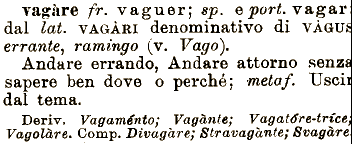
Vaga is rooted in the verb vagare, wandering, vague, even "going around without knowing where or why":


What happens next keeps us attuned to the motif of attention. It all turns on the sun's rising from the sea behind the poets. This is the first natural light in the Commedia. As the red flame appears over the horizon, Dante's body casts a shadow; Virgil's does not, and this precipitates a crisis:
Lo sol, che dietro fiammeggiava roggio,
rotto m'era dinanzi a la figura,
ch'avëa in me de' suoi raggi l'appoggio.
Behind my back the sun was flaming red;
but there, ahead of me, its light was shattered
because its rays were resting on my body.*
As C.H. Grandgent points out, the Italian is convoluted. Literally, it's: "The sun . . . was broken before me in that shape which the stoppage (or leaning) of its rays had in me."

The oddness underscores the specular relationship between Dante's body and the figure (figura) it produces (sort of like Lacan's mirror stage). An image of his body unexpectedly appears before him -- it is seen at this point because the sun is just now introducing the mode of visibility. We might want to ask why the first thing the sun reveals to the pilgrim is a mediated image from which he can infer that he himself is in the way -- an obstacle to pure transparency.

The shadow of Dante's body next to the suddenly realized absence of any shadow of Virgil leads to the fear that Virgil has abandoned him. But here, the appearance of Virgil's disappearance is, in fact, mere appearance.

We think of the aesthetic as that which is simply apparent via the senses. Here with the sun's rise, there is light, and with light the eye begins to function. But the functioning is closer to that of the prisoners in Plato's cave than to simple sensory perception.

What Dante sees -- thanks to the big Eye coming up behind him -- is his shadow, the image or representation of a presence. In the same moment, he realizes he does not see Virgil's figura (i.e., he "sees" the absence of any representation of Virgil's presence) and in a panic, he leaps to a false conclusion. Optics, which we thought was our reliable guide to the world, has opened a minefield of representation (a theatre), and proves to mislead the very first chance it gets.

Before the sun rose, Dante had no possible way of making this error: the question of whether Virgil was by his side (or "there for him") never came up. At the very first opportunity, the aesthetic modality of the visible enables Dante to err in believing that Virgil is no longer there.

In a coherent and nuanced way, the handling of seeing and believing here goes considerably beyond popular USian nostrums such as, "what you see is what you get," or the Missourian "seeing is believing." The light of dawn is the moment that the poem complicates the relation of perception and apperception -- what one believes one knows and what one sees, presence and representation, image and substance.

The apparition of the visible (i.e., of apparition) so arrests Dante the pilgrim's attention that he is misled into confusing appearance with knowledge grounded in something beyond appearance. In doing so, he fails to "see the bigger picture." Whatever else is going on here, this canto is thinking through some of the complications of visible appearance, basic to the category of the aesthetic, with critical rigor.

We'll see where this leads in the second half of Purgatorio 3, with the appearance of Manfred.

*Translation by Allen Mandelbaum

Wednesday, January 07, 2015

Science vs mageía: The Greeks' polemic view

710 ἔθελγέ μ᾽:  he bewitched me

Before we discuss the nature of charm in The Women of Trachis, let's take another quick look at how Sophocles quietly makes us aware that the heroic career of Heracles begins and ends with Centaurs. Chiron stands at the beginning, the divinely wise master of the greatest Greek heroes. Nessus, after bewitching Deianira, sends Heracles a "gift" that ends his labors, and his earthly life.

What's worth noting is the symmetry: these two centaurs are positioned like bookends at either end of the hero's life. One brings enlightenment, skills, the powers of the mind and body, medicine; the other brings delusion, error, and death.

Deianira links the two in her momentous epiphany. Nessus, she says,
bewitched me in order to destroy the man who had shot him. And now too late I gain the knowledge of this, when it can no longer help. Yes, I alone—unless my outlook prove mistaken—I, miserable one, shall completely destroy him! For I know that the arrow which made the wound harmed [715] even the god Cheiron, and that it kills all varieties of beasts that it touches. Since it is this same black venom in the blood that has passed out through the wound of Nessus, must it not kill Heracles also?
Deianira is beginning to work out, to reason about, what has happened. She is no longer in thrall to the dark power of the charm.

Today we are confident that if we mix vinegar and baking soda, we can make a bottle rocket. It's a recipe or formula that produces a predictable result so long as the materials are combined in the prescribed manner.

The ancient world was suffused in charms that had designs upon people. I recently came across a collection of ancient Mesopotamian charms which in fact were counter-charms. They were used to ward off, or neutralize, the work of other people's charms.

Here's a sample counter-charm from Babylonia taken from a scholarly collection at the Universitat Wurzburg:
[If a m]an is constantly frightened (and restless) on his (sick)bed, healways suffers from [depres]sion, 4he has [ver]tigo (and) his feet cause him a stinging pain, 5figurines of that man have been buried in the tomb of a dead person. 6[In the mornin]g you purify the claypit. You take clay from the clay pit. 7You make [two figur]ines.[For the] male [figurine]: 8[You take] a bronze ring [an]d you press(it) on [his] wais[t]. 9[... of ced]ar wo[od ...] you press (it) on her[wa]ist. 10You have them stand [...] ... [...]. 11[...], you libate beer.12[...] ... [
While this practice made for an elaborate system in the Middle East, it was not received without skepticism by the Greeks, according to the authors of the Wurzburg site:
from the very beginning, mageía is not a word that objectively refers to ancient Near Eastern practices, but a term that carries a value judgment prompted by Greek perceptions of the Middle East. Therefore, the origins of ‘magic’ may well be regarded as an early example of ‘Orientalism’, and, characteristically, a blend of fascination, contempt and misunderstanding has accompanied the concept of magic ever since its inception.

Indeed, the authors go on:
Early on Greek authors used the term mágos, a direct loan from Old Persian maguš, not only as a designation for Iranian experts in religious matters, but also as a pejorative term for ritualists whose practices, in the author’s view, lack piety. Derived from mágos, the term mageía soon ubiquitously carried the same polemical connotation. Usually it served as a derogatory label for ritualistic activities that are, by using this designation, characterized as obscure, irrational and impious. Ultimately, in this line of argument, mageía is a powerful deception performed by shrewd practitioners on their immature, credulous victims.
This is not to say the Greeks didn't enjoy elaborate narratives involving magic. But if we think of a character like Circe in the Odyssey, we find a localized "shrewd practitioner" whose powers are not unlimited, and in fact are thwarted by Odysseus with the help of a counter-charm Homer calls moly. For the Greeks, the world was shaped less by rote charms and more by relations between humans and the gods.

One can almost feel the Greek contempt for the roteness of magic formulae. To succeed, a charm does not depend upon anything other than the proper repetition of a series of actions. One need not know chemistry or science, one simply (mindlessly) follows a set of instructions, with the idea that a certain result is guaranteed.

We might suggest a basic distinction here between a charm and a scientific experiment. If one is applying knowledge of materials, of chemical properties, to discover new facts about the world, and follows a set of procedures to that end, this is cognitive: one learns something about the properties of materials and about the world.

But if one simply follows instructions that purport to convey power, or perform some act, there is no burden of inquiry, no yield of discovery. Rather, there's mere repetition of a set of actions. If the actions are properly executed, they produce an effect - somehow. A charm is a technique -- a power that can be accessed by anyone who can access designated materials and follow a set of scripted actions. It's dark technology, causation divorced from any understanding of its nature.

The only thing is, from the standpoint of an outside observer, it might be difficult to tell whether someone is working a charm or performing a scientific experiment -- they share a good deal of external attributes, even as the thinking and intent behind them can be entirely distinct. These happen to be the alternatives embodied in our two Centaurs: Chiron the wise teacher of science and medicine, and Nessus, persuasive Hydra-bile salesman.

The next post will look at a few more aspects of the charm motif in The Women of Trachis.

Friday, November 22, 2013

A tempting existential reading of the chorus (Hippolytus Sc. 5)

I want to return to the choral ode that concludes Scene 5 of the Hippolytus. Our discussion the other day was very helpful in getting a bit further along with it. Some of the difficulties of that ode as noted in a previous blog post now seem a bit clearer. Or perhaps what's clearer is the nature of the difficulties.

It comes right after the confrontation of Theseus and Hippolytus and the final condemnation that Theseus pronounces upon his son, sending him into exile. The chorus -- probably a combination of male friends of Hippolytus and women of Troezen, (men singing strophes and the women antistrophes) -- is reacting to this.

The first strophe is the hardest:

Χορός
ἦ μέγα μοι τὰ θεῶν μελεδήμαθ᾽, ὅταν φρένας ἔλθῃ,
1105λύπα παραιρεῖ ξύνεσίς τε: τίς ἐλπὶς ἃ κεύθει
λείπεται ἔν τε τύχαις θνατῶν καὶ ἐν ἔργμασι λεύσσειν;
ἄλλα γὰρ ἄλλοθεν ἀμείβεται, μετὰ δ᾽ ἵσταται ἀνδράσιν αἰὼν
1110πολυπλάνητος αἰεί.

Here's yet another translation - by E.P. Coleridge:
strophe 1
In very deed the thoughts I have about the gods, whenso they come into my mind, do much to soothe its grief, but though I cherish secret hopes of some great guiding will, yet am I at fault when survey the fate and doings of the sons of men; change succeeds to change, and man's life veers and shifts in endless restlessness.
 The rest of the ode in his translation:
antistrophe 1
Fortune grant me this, I pray, at heaven's hand,-a happy lot in life and a soul from sorrow free; opinions let me hold not too precise nor yet too hollow; but, lightly changing my habits to each morrow as it comes, may I thus attain a life of bliss!

strophe 2
For now no more is my mind free from doubts, unlooked-for sights greet my vision; for lo! I see the morning star of Athens, eye of Hellas, driven by his father's fury to another land. Mourn, ye sands of my native shores, ye oak-groves on the hills, where with his fleet hounds he would hunt the quarry to the death, attending on Dictynna, awful queen.

antistrophe 2
No more will he mount his car drawn by Venetian steeds, filling the course round Limna with the prancing of his trained horses. Nevermore in his father's house shall he wake the Muse that never slept beneath his lute-strings; no hand will crown the spots where rests the maiden Latona 'mid the boskage deep; nor evermore shall our virgins vie to win thy love, now thou art banished.

epode
While I with tears at thy unhappy fate shall endure a lot all undeserved. Ah! hapless mother, in vain didst thou bring forth, it seems. I am angered with the gods; out upon them! O ye linked Graces, why are ye sending from his native land this poor youth, guiltless sufferer, far from his home?
The first strophe is riddled with ambiguities:
In very deed the thoughts I have about the gods, whenso they come into my mind, do much to soothe its grief,
Do we think of the gods as caring, or does the gods' care cause us to have thoughts of them? It's unclear whether the gods are products of our thought, or our thought the result of their care. This suggests an awareness of certain complications in the mind's understanding of its own understanding, of what it knows.

This is followed by statements that use verbs which chiefly mean a lack, a removing, or negating, rather than some positive action. The verb which Coleridge translates as "soothe" the mind's grief, or pain,  is παραιρεῖ -- "take away, remove, filch." The taking away of pain or grief could in fact leave an emptiness that, in contrast with the prior pain, is experienced as soothing, but that's an inference. What is described is a void where before there was grief or pain. The loss of the thought of the care of the gods leaves an absence, a lack.

Our translators show how this in turn is open to reversal. Kovacs gives us grief, the pain of ξύνεσίς, of understanding, banishing the thoughts of the gods:
Thoughts about the gods, when they come into my mind, are banished by painful understanding: [1105]
Our two translators are at odds: does the thought of the gods help us by taking away painful understanding, or does the pain of understanding removes thoughts of the gods?

What's common to both is the sequence that goes from (uncertain) knowledge of the gods to a void which is experienced as a loss, a banishment. The chorus, witnessing the banishment of Hippolytus, confronts a sense of banishment on a cosmic level, as if to say, "If this can happen, then we can't believe in divine order." This is not unlike a modern person witnessing the horrors of WWI, or WWII, or a vast natural disaster, and having his or her faith in some Deity shaken to its foundations. A kind of existential crisis.

The next clause, though tricky, can be parsed:
Coleridge: though I cherish secret hopes of some great guiding will, yet am I at fault when survey the fate and doings of the sons of men;

Kovacs: what hope is there left to see their hidden workings in the fortunes and doings of mortals?
Grene: So I have a secret hope / of someone, a God, who is wise and plans  / But my hopes grow dim when I see / the deeds of men and their destinies.
Where Coleridge and Grene see the hope as being kept a secret by the self that is speaking, Kovacs sees the workings of the Gods as what is concealed, hidden from human verification.

Despite the differences, all three agree that there is another failing, another lack: the verb is λείπεται -- "to leave, to quit, to fail, to lack." Whether or not the chorus's hopes were a guarded secret, such hopes might just as well have not existed, because they leave. failing us when we look upon the works and fates of men.

Both the thought of the gods and the hope of some divine order appear to be negated, or at least thrown into radical doubt, as the chorus witnesses Theseus's harsh judgement. Their sense of the care of a just god is itself experiencing a leaving, a banishment, as they watch Hippolytus leave the city.

One could see this as the existential crisis that takes place when an entire structure of belief in divine order comes crashing down. The vision of human life as πολυπλάνητος αἰεί -- forever much wandering -- comes home just as Hippolytus begins his journey into exile. Human life, to the extent it is banished from order, from meaning, from being at home in the world, is not merely in exile from a home it knew in some anterior condition. Rather, there never was a home. The only possible fate of wandering men -- and we are all wanderers -- is the endless error the Greeks call hamartia.

Now while it might be tempting to hold up a reading like this of the first strophe and declare it a potent statement of the radical existentialist skepticism of the author Euripides, let's note, first, that we've just seen a powerful dramatization of a judgment (Theseus's) based on erring reading of a voiceless witness. Now it is this very scene of bad judgment, or poor reading, which the chorus witnesses, giving rise to its dashed hopes. Shall we, the audience and readers of the play, rush to read the chorus's reading of Theseus's misreading as the summation of Euripides' thinking about men, gods, and life? What's transpired up to this moment in the play might caution us to be more critically aware of hyperbolic interpretive pitfalls.

In short, for the reader of this play about errors of reading, it could be premature to leap from these few lines sung by the chorus to interpretive conclusions about the play and its author as a whole. Besides, this is only the first strophe of the ode; the antistrophe pursues a different tack.

Saturday, December 18, 2010

From "Who saw?" to "I see"

This post is a bit long, and not finished. Just trying to tie together several threads that emerged from our close look at Book 5 of Paradise Lost this fall.

We noted the other day a contrast in the poetics of the book: on earth, the rich, full-blooded Keatsian bounty of Eve's table:

fruit of all kindes, in coate,
Rough, or smooth rin'd, or bearded husk, or shell
She gathers, Tribute large, and on the board
Heaps with unsparing hand; for drink the Grape
She crushes, inoffensive moust, and meathes [ 345 ]
From many a berrie, and from sweet kernels prest
She tempers dulcet creams,


In heaven, the somewhat anodyne, music-box routine of the angels:

Forthwith from dance to sweet repast they turn [ 630 ]
Desirous, all in Circles as they stood,
Tables are set, and on a sudden pil'd
With Angels Food, and rubied Nectar flows
In Pearl, in Diamond, and massie Gold,
Fruit of delicious Vines, the growth of Heav'n.


On the level of sheer poetry, the book is already arguing that to be human is to share Satan's impatience with too much passive ease and involuntary order.

Book 5 looks at how we got from paradise to humanity -- the problem of the fall, and of knowledge -- from a variety of perspectives. As Professor Rogers has noted, the poem opens out to multiple models of the world that are not necessarily in agreement with each other:
As a poem, Paradise Lost places all of its divergent theories and all of its competing ideologies and visions of the way the world works -- places them all side by side on something like a level playing field, the playing field of the poetic line.
We've looked in particular at the complex imagery of stars and sun, dawn and eclipse interwoven throughout the book. With regard to the theme of mind, of knowing, they offer an entirely consistent model of human understanding as illumination: a power of seeing, clarifying, distinguishing:

know that in the Soule [ 100 ]
Are many lesser Faculties that serve
Reason as chief

This is science, and it's entirely rooted in nature and compatible with the classical model of education, of paideia in Plato's sense as a turn from darkness to light, shadow to truth.

So from the root
Springs lighter the green stalk, from thence the leaves [ 480 ]
More aerie, last the bright consummate floure
Spirits odorous breathes: flours and thir fruit
Mans nourishment, by gradual scale sublim'd
To vital Spirits aspire, to animal,
To intellectual, give both life and sense, [ 485 ]
Fansie and understanding, whence the Soule
Reason receives,

Via the alchemy of conversation, or dialog, one communes, questions and consumes, digests, ruminates and refines in the manner of the chain of being:

one Almightie is, from whom
All things proceed, and up to him return, [ 470 ]
If not deprav'd from good, created all
Such to perfection, one first matter all,
Indu'd with various forms, various degrees
Of substance, and in things that live, of life;
But more refin'd, more spiritous, and pure, [ 475 ]
As neerer to him plac't or neerer tending
Each in thir several active Sphears assignd,
Till body up to spirit work, in bounds
Proportiond to each kind.


As Raphael's narrative continues, God, invisible in brightness, puts something new into this order -- his only begotten Son. The dawn of this Son, unlike the natural sun, is not something that simply rises out of the order of things. It is new, and it confounds the sense of reason that has been developing throughout the book. How can the Son be new if, as Word, He created the angels and all else? Is he the same as the Father or different? The new Son disturbs, runs counter to all that can be "understood" through natural light. It's going to take more than conversation, observation, and rumination to digest this new being.

At the same time, ignorance is not an option: all are under orders to actively acknowledge and obey this power, or be forever fallen:

him who disobeyes
Mee disobeyes, breaks union, and that day
Cast out from God and blessed vision, falls
Into utter darkness, deep ingulft, his place
Ordaind without redemption, without end.
[ 615 ]

Satan will invoke reason in his resistance to this mandate:

Who can in reason then or right assume
Monarchie over such as live by right [ 795 ]
His equals, if in power and splendor less,
In freedome equal? or can introduce
Law and Edict on us, who without law
Erre not,


Satan is using all the resources of logic and rhetoric to persuade his followers. Only Abdiel remains unmoved, and intuitively goes to the question of origin, generation, primacy:

But to grant it thee unjust,
That equal over equals Monarch Reigne:
Thy self though great and glorious dost thou count,
Or all Angelic Nature joind in one,
Equal to him begotten Son, by whom [ 835 ]
As by his Word the mighty Father made
All things, ev'n thee . . .


And it is this that Satan seizes upon, because he can summon reason to assist him:

who saw
When this creation was? rememberst thou
Thy making, while the Maker gave thee being?


If Abdiel can't provide empirical evidence, Satan suggests, then isn't it more likely, more"reasonable," to understand that we are self-generated?

We know no time when we were not as now;
Know none before us, self-begot, self-rais'd [ 860 ]
By our own quick'ning power,

But as he immediately goes on to say, to understand this sort of origination is to invoke a model of the world as determined, a natural system guided by Fate:

when fatal course
Had circl'd his full Orbe, the birth mature
Of this our native Heav'n, Ethereal Sons.


We are all sons, but natural offspring of an order that runs on its own, without any Maker. No one created the program, it just runs -- always has, always will, nothing new under the sun.

Abdiel wastes no time arguing the issue. Instead he responds to Satan's "Who saw?" with "I see":

I see thy fall
Determind,


For Abdiel, it's not reality that's determined, but Satan. By choosing to deny the Son, he denies the Father, and in choosing that, he commits to an understanding -- "reasonable," to be sure -- that removes all freedom, not from the world, but from himself. Abdiel doesn't just "see" this, he hears it:

other Decrees
Against thee are gon forth without recall;
[885]

Against the visual, differentiating, communal, scientific world of reasoned knowledge -- which Milton and Raphael both value as the pinnacle of human being -- this introduces another kind of knowing. Abdiel here is neither seeing Satan literally falling, nor hearing audible decrees. Yet he "sees" that Satan's passport to paradise has been cancelled, just as Adam and Eve, in a sudden revelation that has nothing to do with argument, evidence, or the light of the sun, will see that they are naked. The book ends:

And with retorted scorn his back he turn'd
On those proud Towrs to swift destruction doom'd.


Abdiel turns away from a world that is doom'd by its knowledge that actively ignores power or knowing that might lie beyond the sun.

For Milton, as for Dante, all that the human mind can learn from itself and about nature falls within this doom. This is the natural world of science, the seasons, the rising and falling sun, the arc of life, the inevitability of death.

In Dante's Purgatorio, what lies outside that system arrives with Beatrice in the garden at the top of the mount. Here in Book 5, what lies outside that system is what Satan rejects: the Son and the inexplicable obligation that is imposed with Him.

Abdiel rejects that rejection, and foretells the eclipse of Lucifer. It's interesting to note that untold millions of angels, including other Seraphim (Abdiel is "among the Seraphim" in Satan's retinue), are swayed by Satan.

Rogers argues with some detail that Paradise Lost is not coming down finally on any side of this. He says, for example:
it's not absolutely clear to me that Satan is wrong to claim that the angels are "self-rais'd / by their own quick'ning power." I think on some level this has to be seen as true, at least according to what we know of the dynamic processes in Milton's account of the monistic Creation.
More than ever, then, we as readers are Adam, hearing a story that seems to have justice on both sides. So it'll be worthwhile to look at the horrific destruction of the War in Heaven in Book 6, and at the Creation in Book 7, with these complications in mind.