Showing posts with label sun. Show all posts

Saturday, October 08, 2016

This old man and "la gente folle"

We've been asking for a while why it is that at the midpoint of the Paradiso, when we ought to be ascending to the Empyrean, Dante brings us down to earth to listen to an old man who spends three cantos evoking the good (and not so good) old days. 

Of course, it's not any old man.

Paradiso 17 is both the center of the highest canticle and the climax of the pilgrim's encounter with Cacciaguida. Whatever else we might say interpretively, it's clear than Dante has presented us with a vivid, lively character, a fully rendered human being. He is, of course, a man of many parts -- polutropos, as Homer might have said.

Cacciaguida beams with love and joy at meeting his great-great grandson. He has the suppleness of many languages at his disposal, retains a strong memory of his life in Florence, and expresses his love for that earlier moment in its history. He possesses providential vision (as do all whose gaze reaches the cospetto eterno), and, with chivalric precision, seizes the culminating moment of their encounter to en-coeur-age his "leaf." 

The text in which Cacciaguida appears does more than offer a memorable human portrait. Canto 17 opens with the scene of Phaeton seeking to know his old man. One can be told the Sun is one's father, but one wants proof. Seeking to control the horses of the Sun, however, proves to be an apocalyptically bad idea. To the ancient world, nothing was more difficult to know in clear, uncertain terms than one's origin. 

Similarly the tale of Hippolytus and Theseus brings to the fore how difficult it is for a father to know his horseman son* -- even a father who could thread the Minoan labyrinth. Genetic relations are dangerous, treacherous, and difficult to read. Visit the Sun, you're still in the dark -- the ways of the world are ambiguous, indirect -- ambage, as the poet will say.** Natura oscura.

The encounter with Cacciaguida, though, marks a rupture that seems to lead out of this predicament. The full impact of this meeting's place in the heavens becomes clear when we gather that here, on Mars, among the warriors, Dante as pilgrim and poet is reoriented to a point outside the natural order:

                                     il punto  
a cui tutti li tempi son presenti; (17:17-18)

This point, beyond the natural world, sees all contingency before it can occur, and is in fact a reliable source of intelligence about all origination. In learning of his family, his home, and his life through the triangulated gaze of Cacciaguida, Dante is acceding to a source beyond the Sun.
Né per ambage, in che la gente folle
già s'inviscava pria che fosse anciso
l'Agnel di Dio che le peccata tolle,

ma per chiare parole e con preciso
latin rispuose quello amor paterno,
chiuso e parvente del suo proprio riso:
Not in vague phrase, in which the foolish folk 
Ensnared themselves of old, ere yet was slain 
The Lamb of God who taketh sins away, 
But with clear words and unambiguous 
Language responded that paternal love, 
Hid and revealed by its own proper smile: (17:31-36)

La gente folle -- that is, all who lived before the slaughter of the Agnel -- is a potent critique of the world of Virgil and David, Plato and Moses. And it's spoken here not by Cacciaguida or Beatrice, but by Dante. The pathos of the ancients in the first circle of hell, living eternally in desire without hope, is recalibrated here in this new light. The poem is moving yet again into a new phase.

In the next post, we'll see a little of what that new phase entails. One thing is for sure: Dante, as a poet whose poem does what it says, will not leave Cacciaguida until he comes to grips with himself as pilgrim and his mission as poet. The union - or fusion - of pilgrim and poet can be realized, but only in mutual sacrifice. 

What is remarkable here is how Dante grounds even this moment of moving beyond Nature firmly in the world of men. Cacciaguida is no demi-god. No supernatural figures or forces are acting here. There is the word of a sacrificial lamb that broke the ancient model of the gente folle, and a plain-talking old man who guides Dante on his hunt.


*Hippolytus and Phaeton can be seen as classical prefigurations, or analogues, of Corso and Buondelmonte.

**The word ambage appears only here in the Commedia. Hollander's note on the word (l. 31) is helpful - this is the first half of it.
The word ambage has an interesting history. Dante probably found its most troubling presence in Aeneid VI.99, where ambages was used to typify the animal-like sounds of the cave-dwelling Sibyl's prognostications. On the other hand, and as Pio Rajna (“Arturi regis ambages pulcerrimae,” Studi Danteschi 1 [1902]: 91-99) has pointed out, in Virgil, Ovid, and Statius it is also used to describe the twisting path found in the Cretan labyrinth; it also in Virgil indicates an enigmatic way of speaking. 
The etymology reflects this:


Tuesday, April 26, 2016

From geometry to rapture: Paradiso 14

Paradiso 14 begins with a geometric structure, captured in the rhetorical pattern known as chiasmus. The word pattern is reflecting, or mimicking, the echoic pattern of water moving in a round vase - from center to circumference, or vice versa, depending upon where something strikes it:
Dal centro al cerchio, e sì dal cerchio al centro
movesi l'acqua in un ritondo vaso,
secondo ch'è percosso fuori o dentro:
 
From centre unto rim, from rim to centre,
In a round vase the water moves itself,
As from without 'tis struck or from within. (Par. 14. 1-3)
The geometry is not only exact, it is also ineluctable -- the water (or a light, or a sound) will always behave this way. The structure of the circle is such that it will produce the same result each time something either strikes it on the outside, or drops from above.

Such patterns and their identification belong to the work of pattern recognition, which Dante draws our attention to (as we saw a few posts back) with regard to the patterns found in the night sky, and in the sphere of the sun. The reliability of knowledge, we learned, depends upon our capacity to detect formal patterns in nature as well as in language.

Sophie Germain
Some patterns occur in ways that are easily explicable. Others occur quite reliably, but seem less easily explained. Chladni plates (named for Ernst Chladni, whose research explored the invisible interface between sounds and visual patterns) offer evidence of relationships between grains of sand (or couscous) and different frequencies which manifest in distinct patterns at different vibrations. The relationships turn out to be mappable by equations (worked out by Sophie Germain and others) that describe wave dynamics:


Beyond the Sun

This pattern of pattern recognition is violated in Paradiso 14 right after Solomon explains how, after the Resurrection of the body, the souls will still have their glowing light, but now they will have their senses, newly strengthened and able to experience all things new.

No sooner does Solomon end his resonant (and very chiastic) account of this event (at line 66) than we hear Ed ecco -- behold! -- something new and unexpected occurs:
Ed ecco intorno, di chiarezza pari,
nascere un lustro sopra quel che v'era,
per guisa d'orizzonte che rischiari.
 
E sì come al salir di prima sera
comincian per lo ciel nove parvenze,
sì che la vista pare e non par vera,
 
parvemi lì novelle sussistenze
cominciare a vedere, e fare un giro
di fuor da l'altre due circunferenze.
 
Oh vero sfavillar del Santo Spiro!
come si fece sùbito e candente
a li occhi miei che, vinti, nol soffriro!
And lo! all round about of equal brightness
Arose a lustre over what was there,
Like an horizon that is clearing up.

And as at rise of early eve begin
Along the welkin new appearances,
So that the sight seems real and unreal,

It seemed to me that new subsistences
Began there to be seen, and make a circle
Outside the other two circumferences.

O very sparkling of the Holy Spirit,
How sudden and incandescent it became
Unto mine eyes, that vanquished bore it not!  (14.70-78)
The moment is mysterious -- a third circle, but not quite stable, begins to surround the other two. It glimmers like faint lights flickering at dusk, then suddenly becoming blindingly incandescent, overpowering the pilgrim's eyes, which had so far supported the potent rays of the Sun.

Joachim of Flora
Commentators have pondered he meaning of this third circle at length, relating it to the other circles as the Holy Spirit to the Father and Sun, and to prophecies of the Calabrian Joachim of Flora and the dawning of a third age.

What we can say for sure is that in this gloaming nothing is sure: The nove parvenze, or novel appearances, are said to "appear to begin to be seen,"
Si che la vista pare e non par vera,  
So that the sight seems real and unreal.
The canto moves from a realm of regular and predictable order (like the geometry of a vase of water) to a place where appearances are such that they suspend, put into question, our apprehension of pattern. This cognitive predicament, known to psychologists as apophenia, has been described as "the human tendency to perceive meaningful patterns within random data." To find a man or a face in the moon is a common example. The article goes on to note:
Apophenia has come to imply a universal human tendency to seek patterns in random information, such as gambling.
Paradiso 14 is quite clear in breaking with patterns it has produced. It's at line 67 for example that we expect to find another set of 33 lines reiterating the first two, whose clear structure was noted by early commentators like Benvenuto da Imola.

This moment of sunset takes place just as Dante and Beatrice, before they even know it, leave the sun and with it the confidence owed to its clarity. In this darkling moment nothing is certain. If the new circle contains dottori, learned authors, it's unclear how many authors, let alone who they might be. It's all indistinct, says Benvenuto:
non tamen plene et manifeste sicut primae, sed confuse, quia hic erat maximus numerus doctorum quos autor non poterat nominatim numerare, sicut fecerat superiores, nec distincte; sed sub involucro comprehendit omnes.
A new circle appears to appear, and the passage puts stress not upon the solid form of a new circumference, but rather seems to find astonishment that what had been the circumference seems surpassed (sublated, i.e., cancelled and transcended)  by a new circumference -- yet one whose borders remain vague, with the possibility of containing millions of sussistenze in its sparkling (sfavillar). 

The challenge of not knowing is not trivial. It's at this moment that Dante and Beatrice are translated to the sphere of Mars, and now the pilgrim seems to fall back upon his own powers. He raises his eyes, and, as he does so, he and Beatrice are raised up; he now performs a sacrifice in his breast. He is doing these things unprompted and undirected. The action brings results -- a glowing redness in the new sphere appears to answer and approve his internal holocaust.

Close attention to the remainder of the canto will show that the language of action, of performative utterance, supplants the descriptive language of pattern. As the vast galaxy within Mars appears, the vision seems boundless, open-ended, and what the pilgrim begins to experience are, not patterns, not meanings that are understood, but potent beauties that seize the soul:
E come giga e arpa, in tempra tesa
di molte corde, fa dolce tintinno
a tal da cui la nota non è intesa,

così da' lumi che lì m'apparinno
s'accogliea per la croce una melode
che mi rapiva, sanza intender l'inno.
And as a lute and harp, accordant strung
With many strings, a dulcet tinkling make
To him by whom the notes are not distinguished,

So from the lights that there to me appeared
Upgathered through the cross a melody,
Which rapt me, not distinguishing the hymn. (14.118-123)
Three times in quick succession we hear that something is non intesa -- not understood. To go from the Sun to Mars is to go from an aesthetic of beauty to that of the sublime. Perhaps nothing makes this more "clear" than the simile that juxtaposes the vast armies that seem to move along the flashing crossbeams to specks and motes moving at random in a sunbeam. The beam shines through an artificial shade devised by human cunning and art to shield us from the harsh sun. Ingenio e arte provide a glimpse of what was always there, unseen in the full light of day:
così si veggion qui diritte e torte, 
veloci e tarde, rinovando vista, 
le minuzie d'i corpi, lunghe e corte, 
moversi per lo raggio onde si lista 
talvolta l'ombra che, per sua difesa, 
la gente con ingegno e arte acquista.
Thus level and aslant and swift and slow
We here behold, renewing still the sight,
The particles of bodies long and short,

Across the sunbeam move, wherewith is listed
Sometimes the shade, which for their own defence
People with cunning and with art contrive. (14.112-117)
The random specks are not caught up in some Chladni pattern - they remain random. And, of course, they are tiny, compared to the galassia and the giant cross, and the figures moving along its beams. This is perhaps as Miltonic as Dante gets -- vast and small, order and unforced happenstance, equated in a heightened moment of sublime apprehension -- not of pattern, rather a new rapture, potent and uncircumscribed by finite meaning.


Friday, April 15, 2016

Preparing to go beyond the sun: Par. 13

As the cantos of the Sun come to an end with Paradiso 13-14, the density and richness of the text seem to grow exponentially. There is simply not enough time to get into the close detail that would do justice to canto 13. For now, a few observations that perhaps will help appreciate what seems to be a major transition that takes place between the clarity of the Sun and the distinctly indistinct realm of Mars that begins with canto 14.

First, as many note, the five cantos of the Sun have many instances of the x-shaped crossing (or ring structure) of chiasmus. One can only appreciate this patterning after completing all five cantos, of course. Indeed, one could say that appreciation of chiastic form, especially on the level of larger segments of text, always requires that the reader look back, and remember what has come before, in order to identify the pattern.

For example, the command to imagine, repeated thrice at the opening of canto 13, balances Thomas Aquinas's insistence on being attentive and holding things in memory at the end of canto 11, introduced by three "if"s:
Or, se le mie parole non son fioche,
se la tua audïenza è stata attenta,
se ciò ch'è detto a la mente revoche,
Now if my utterance be not indistinct,
If thine own hearing hath attentive been,
If thou recall to mind what I have said,  (11.133-35)
Thomas is talking about the pilgrim's understanding of his discourse, but the "if"s hold true for the reader as well -- turning the leaves of a book, the reader is taking in the words, which are like seeds. But the work of reading involves more than just taking in -- it involves remembering, reflecting, and attending to patterns to mill and bake and eat the bread of the angels.

So canto 13 beings with a fascinating passage too complex to explore here. But we can note that the reader is now invited to do more than remember; one is to imagine what the poet describes : 15 of the brightest stars from all over the night sky, plus the 7 of the Wain (the Big Dipper), plus two at the mouth of the horn (the Little Dipper) -- moving from a process of selection by brightness to a selection by form to a selection of part of a whole, anchored in the North Star -- all adding up to 24 stars.


The poet is giving the reader an exercise in pattern recognition, a kind of rebus or puzzle that makes us work across different kinds of patterns before reaching a totality of 24, which equals the number of teachers revolving in two wheels around the poet and Beatrice, as well as the number of lines it takes the poet to provide us with the opening movement of canto 13.

The passage of course is more complex -- once we shape the images we've been told to imagine -- we then must imagine those stars turning into two wheeling signs like a doubled crown of Ariadne:
aver fatto di sé due segni in cielo,
qual fece la figliuola di Minoi
allora che sentì di morte il gelo;
To have fashioned of themselves two signs in heaven,
Like unto that which Minos' daughter made,
The moment when she felt the frost of death;
Our envisioning of the key stars in charting the navigation of the seas -- signs used by Ulysses and all mariners -- is metamorphosed into new signs, like those of the girl who helped Theseus navigate his way into and out of the lethal Daedalian labyrinth of Crete.

And, after we've done all this at the poet's behest, we learn that our imagined vision relates to the reality Dante experienced the way the Chiana, a sluggish Tuscan stream, compares to the fastest celestial sphere, the Primum Mobile.

Chiana, we note, contains "chi," and the entire 24-line passage is a chiasmus that begins with the promise that our imagining will give us "who desire to well understand what the poet saw" something verisimilar to the reality, and ends with the deflating assurance that our mental image is about as close to the truth as night is to day.

The irony of making us work so hard for what is very small is undeniable. There's also death here, coming with a cold shock. One could (and should) explore the ramifications of a passage from navigational clues -- constellations -- to circling signs that are "like" the figure made in the sky by the daughter of Minos. Interwoven here are Ulysses and Theseus, two of the ancient questers who, by the light of their culture's wisdom, were successful.

Throughout the Commedia, the pilgrim/poet has been both like and unlike these heros (as well as Aeneas). Are we reminded here of how those questers in fact failed? We recall Ulysses' own tale (in Inf.26) of leaving behind the North Pole, and the vortex that consumed his ship. And Theseus, who owed his conquest of the Minotaur to the clues of Ariadne, left his guide behind, to be claimed by Dionysus, who constellated her crown at her death.

Here that single circle of stars is doubled, yet is still called a sign. It's a new sign, a double dancing "true constellation" that is not visible to sailors on Earth, but to questers who read and remember the visions and histories and allegories of the 24 teachers, grouped according to their leanings toward Francis and Dominic.

We return to the two wheels of the chariot/Church, also the two wheels of the Ark, but now they are likened to a doubled crown put in the sky by Dionysus.

This reference to the God of wine and ecstasy should, as Thomas A. says, be kept in mind. We're about to get a comprehensive lesson from Thomas about creation, which will treat in some detail the imperfections of "wax" that cause diversity and flaws in Nature. It turns out that form, here below the moon anyway, is always compromised, never without contingency and dross:
Se fosse a punto la cera dedutta
 e fosse il cielo in sua virtù supprema,
 la luce del suggel parrebbe tutta;
 
ma la natura la dà sempre scema,
 similemente operando a l'artista
 ch'a l'abito de l'arte ha man che trema.
If in perfection tempered were the wax,
  And were the heaven in its supremest virtue,
  The brilliance of the seal would all appear;
But nature gives it evermore deficient,
  In the like manner working as the artist,
  Who has the skill of art and hand that trembles.  (13.73-78)
At this moment in the lesson of the Sun, Thomas acknowledges that Nature is inherently errant, like the hand of a master artist that trembles. (Hollander and others convincingly refer to Ovid's Daedalus building the wings that will enable him to escape from Crete, but at the cost of Icarus: "The father's hands trembled," (Metam. 8.211)). Greek genius always involves loss, just as the forms of Nature always involve dross. The limits of the visible, of image and form, are being driven home in canto 13.

The last lines of canto 13, suggesting the generous capacity even the wisest men have for error, chiastically reflect the opening of canto 11, the insensata cura of mortals and their vain syllogisms. As we leave the Sun, the limits of the Apollonian -- of realizable pattern and hence formal knowledge -- are being demarcated.

The question of how do we go on -- by what signs to navigate once we've crossed beyond the solar light of logic, history, science, philosophy and wisdom -- is taken up in canto 14.

Monday, February 29, 2016

Paradiso 10: Why the Earth has seasons

Lift up then, Reader, to the lofty wheels
With me thy vision straight unto that part
Where the one motion on the other strikes, 
And there begin to contemplate with joy
That Master's art, who in himself so loves it
That never doth his eye depart therefrom. 
Behold how from that point goes branching off
The oblique circle, which conveys the planets,
To satisfy the world that calls upon them; 
And if their pathway were not thus inflected,
Much virtue in the heavens would be in vain,
And almost every power below here dead. 
If from the straight line distant more or less
Were the departure, much would wanting be
Above and underneath of mundane order. 
Remain now, Reader, still upon thy bench,
In thought pursuing that which is foretasted,
If thou wouldst jocund be instead of weary. 
I've set before thee; henceforth feed thyself . . . 
  1. The Earth's axis is tilted 23.5o with respect to the ecliptic and is always pointed to the celestial poles as the Earth moves around the Sun. Sometimes the northern hemisphere is tilted toward the Sun and sometimes the northern hemisphere is tilted away from the Sun.
     
  2. The Earth's orbit around the Sun is NOT circular.
     
  3. The apparent path of the Sun in the sky is known as the ecliptic and is actually the intersection of the plane of the Earth's orbit with the celestial sphere. Because the rotation axis of the Earth (which defines the celestial sphere) is tilted at an angle of 23.5o with respect to the plane of the Earth's orbit, the ecliptic is inclined at an angle to the celestial equator, as shown in the diagram below.
    The ecliptic and the equator intercept at two points, the vernal and autumnal equinox:  
    • Vernal or spring equinox: This point is defined as the point where the Sun, moving along the ecliptic, crosses the celestial equator from south to north. Occuring on March 21, when day and night are of equal length, this marks the beginning of spring.The altitude of the Sun in the sky increases from the spring equinox to a maximum (farthest North) on June 21 - the summer solstice - marking the beginning of summer.
    • Autumnal or fall equinox: This point is defined as the point where the Sun, moving along the ecliptic, crosses the celestrial equator from north to south. Occuring on September 21, when day and night are again of equal length, this marks the beginning of fall.The altitude of the Sun in the sky decreases from the autumnal equinox to a minimum (farthest South) on December 21 - the winter solstice - marking the beginning of winter.

Wednesday, July 22, 2015

Dawn of error: Seeing and disbelieving in Purgatorio 3

The beauty briefly experienced in Purgatorio 2 is intimately interwoven with this canticle's concern with the Aesthetic. We saw how the power of Casella's song captured the attention of the listeners. That motif continues in cantos 3 and 4, and it's worth considering why this concern with attention to sensory appearance -- with its aesthetic and epistemological implications -- surfaces here, and how it is played off against other elements in the text.

Whatever else attention to attention yields, it offers a self-reflexive mode of heightened clarity -- almost transparency. Attention in these cantos is represented as something that can be fixed upon some particular thing, then loosed; it can focus exclusively on one object, as when Dante looks intently at the boat propelled from far to near by the Angel, or when the newly arrived souls focus on Dante's breathing because it signals that, unlike them, he is a living body.

In canto 3, Dante and Virgil, scolded by Cato, have been running like frightened doves after having stood motionless, fixated upon Casella's song. As Dante ceases running, his mind's gaze begins to expand:
la mente mia, che prima era ristretta,
    lo 'ntento rallargò, sì come vaga,
e diedi 'l viso mio incontr' al poggio
che 'nverso 'l ciel più alto si dislaga.
my mind, which was -- before -- too focused, grew 
more curious and widened its attention;
I set my vision toward the slope that rises
most steeply, up to heaven from the sea.*
Note that in Dante's terms, the mind has gone from ristretta to vaga -- from a limited, specific focus to a more open, fluid, indeterminate state. (Vaga in this passage rhymes with dislaga -- almost certainly a word created by Dante: the mountain "dis-lakes" itself from the sea, much as the pilgrim in Inferno 1 barely escaped from the lago del cor.)

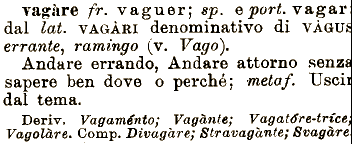
Vaga is rooted in the verb vagare, wandering, vague, even "going around without knowing where or why":


What happens next keeps us attuned to the motif of attention. It all turns on the sun's rising from the sea behind the poets. This is the first natural light in the Commedia. As the red flame appears over the horizon, Dante's body casts a shadow; Virgil's does not, and this precipitates a crisis:
Lo sol, che dietro fiammeggiava roggio,
rotto m'era dinanzi a la figura,
ch'avëa in me de' suoi raggi l'appoggio.
Behind my back the sun was flaming red;
but there, ahead of me, its light was shattered
because its rays were resting on my body.*
As C.H. Grandgent points out, the Italian is convoluted. Literally, it's: "The sun . . . was broken before me in that shape which the stoppage (or leaning) of its rays had in me."

The oddness underscores the specular relationship between Dante's body and the figure (figura) it produces (sort of like Lacan's mirror stage). An image of his body unexpectedly appears before him -- it is seen at this point because the sun is just now introducing the mode of visibility. We might want to ask why the first thing the sun reveals to the pilgrim is a mediated image from which he can infer that he himself is in the way -- an obstacle to pure transparency.

The shadow of Dante's body next to the suddenly realized absence of any shadow of Virgil leads to the fear that Virgil has abandoned him. But here, the appearance of Virgil's disappearance is, in fact, mere appearance.

We think of the aesthetic as that which is simply apparent via the senses. Here with the sun's rise, there is light, and with light the eye begins to function. But the functioning is closer to that of the prisoners in Plato's cave than to simple sensory perception.

What Dante sees -- thanks to the big Eye coming up behind him -- is his shadow, the image or representation of a presence. In the same moment, he realizes he does not see Virgil's figura (i.e., he "sees" the absence of any representation of Virgil's presence) and in a panic, he leaps to a false conclusion. Optics, which we thought was our reliable guide to the world, has opened a minefield of representation (a theatre), and proves to mislead the very first chance it gets.

Before the sun rose, Dante had no possible way of making this error: the question of whether Virgil was by his side (or "there for him") never came up. At the very first opportunity, the aesthetic modality of the visible enables Dante to err in believing that Virgil is no longer there.

In a coherent and nuanced way, the handling of seeing and believing here goes considerably beyond popular USian nostrums such as, "what you see is what you get," or the Missourian "seeing is believing." The light of dawn is the moment that the poem complicates the relation of perception and apperception -- what one believes one knows and what one sees, presence and representation, image and substance.

The apparition of the visible (i.e., of apparition) so arrests Dante the pilgrim's attention that he is misled into confusing appearance with knowledge grounded in something beyond appearance. In doing so, he fails to "see the bigger picture." Whatever else is going on here, this canto is thinking through some of the complications of visible appearance, basic to the category of the aesthetic, with critical rigor.

We'll see where this leads in the second half of Purgatorio 3, with the appearance of Manfred.

*Translation by Allen Mandelbaum

Monday, October 27, 2014

Night and Sun in the first ode: Women of Trachis


He to whom flickering Night, despoiled of shining armor 
gives birth and lays down to sleep ablaze, 
Sun, Sun, I ask 
that you proclaim this,
where is Alcmena's son, 
where dwells her child? O radiant fiery flash, 
is he in the hollow seas, or does he wander the twin continents? 
Speak, O strongest eye!

95
100

The chorus of Women of Trachis begins its first ode at a very high pitch. The compressed scene of the first two lines: Night, stripped of her starry armor like a slain Homeric hero, gives birth to the sun, whose plundering blaze is extinguished within her deep folds. It's the agon of light on Earth. To hear that Night is stripped like the corpse of a Homeric warrior should cause wonder. Who, what, is this mother who births the warrior that despoils her arms, and tucks him in?  

Mothers so despoiled by their children might not be content. Is Night angry with the plunderer? She tucks him in every evening - a mild ministry of love? Or a reassertion of her ineluctable primacy, her beforeness, that no entity, however hot and bright, can displace. Certainly Heracles, whose whereabouts the sun is begged to publicly proclaim after the manner of a herald, has encountered his share of potent angry goddesses. The anger started before he was born, and ended only with his conflagration. Hera's fury.

Enfolding mother and solar son, each taking the other down just when that other appears invincible. The virginal maidens of Trachis might be singing the ode, but its burden is Sophoclean. In this cosmic context, nothing, not even motherhood, is sacred. In the unceasing sacrifice, a making sacred might not be unimaginable -- but it's probably not going to be demonstrable. Yet even Zeus fears to anger Night.

Monday, March 22, 2010

Light on, or at least in, Book III

Looking back at Book III, one could very well call it the "book of light." It begins with the invocation to light,

Bright effluence of bright essence increate


.and rises to a climax on the source of worldly light:

The golden Sun in splendor likest Heaven


This being Milton, there's more to light than first appears, and we're not bathed in the neutral, evenly distributed fluorescence of the observational laboratory of scientific reason. 


The invocation in Book III addresses primordial holy Light, not the sun. If we think of "light" as a spectrum from the highest holy light to the dimmest light of "darkness visible," we discover that at the high end, we see nothing: God's beam is blinding, even when in a cloud. And material light is not invariably revealing: Satan manages to hide his actual identity from the sharpest-eyed archangel, Uriel, precisely at the brightest spot in creation.

Clearly (no pun intended) Milton is trying to establish light's importance even as he suggests critical ways in which it can fall short. Light does not show us, our eye -- everything we need to see, to understand. We learn of God and the Son's plan to counter Satan's schemes via a difficult, tightly coiled verbal maze of an argument; nearly all of it deals with supersensory concerns, like Justice, Mercy, and Grace.

Light can also lead astray. Satan sees the ladder to Heaven, but is attracted like a moth to the Sun, a shiny new bauble.

All of which is to suggest that there's more to what is going on in Paradise Lost than meets the eye. The power of light to carry or to reveal knowledge, truth, is shown as compromised, less than all-sufficient, fallible. When Uriel describes creation, first comes an act of the word:

I saw when at his Word the formless Mass,
This worlds material mould, came to a heap:
Confusion heard his voice, and wilde uproar [ 710 ]
Stood rul'd, stood vast infinitude confin'd;

One might ask, what was it that he "saw", and how could he see it? Only at the Word's "second bidding" did light cause the world to appear. We're dealing with something more - or other - than purely a solar system.

For the reader, it's perhaps illuminating to sense the reservation, the skeptical brackets, being put around light in the poem. This may resonate more when Lucifer seduces with his promise to enlighten Adam and Eve.

Sunday, March 14, 2010

Uriel

Jutta shared this illustration of Uriel, from this site:


The image is an engraving in The Poetical Works of John Milton by W. Harley, 1794. The site also offers some of the accumulated lore about Uriel, including the information that:
"He (or she) is the keeper of the mysteries which are deep within the planet, underground and in the hidden depths of the living world."
Which is interesting in "light" of Milton's making clear that the sun touches not merely surfaces, but depths as well:

What wonder then if fields and region here
Breathe forth Elixir pure, and Rivers run
Potable Gold, when with one vertuous touch
Th' Arch-chimic Sun so farr from us remote
Produces with Terrestrial Humor mixt [ 610 ]
Here in the dark so many precious things
Of colour glorious and effect so rare?

A pointer on the site takes us to South America, where Uriel's connection with ripening grain gives us this image: