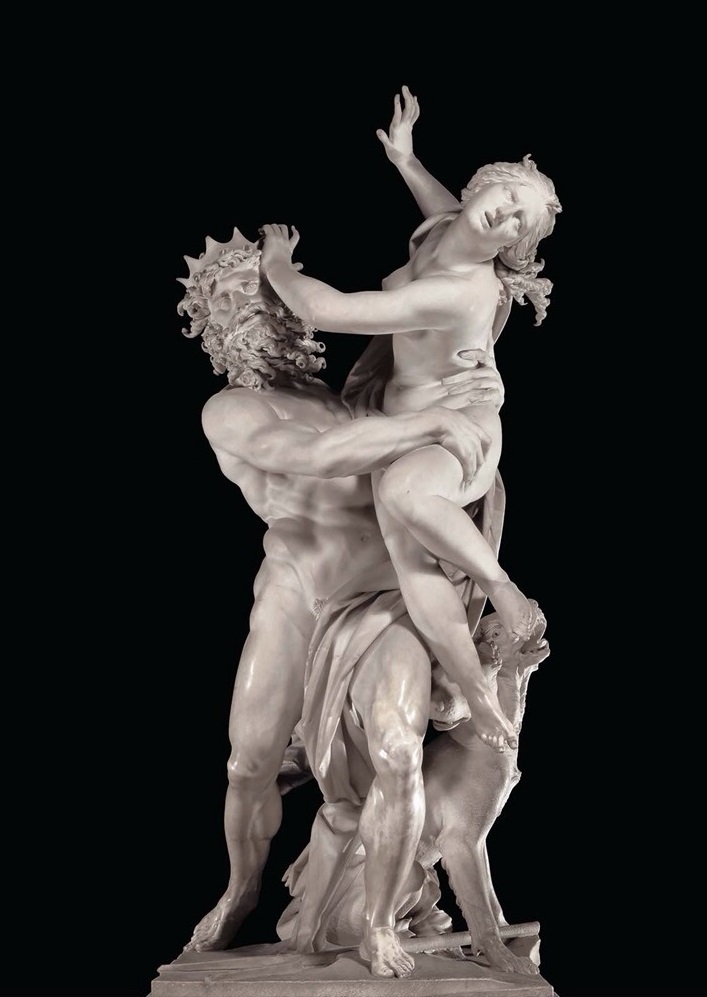
Not that faire field
Of Enna, where Proserpin gathering flours
Her self a fairer Floure by gloomie Dis
Was gatherd, which cost Ceres all that pain
To seek her through the world;
Milton's linking of Eve to Proserpina in Book IV immediately prior to our seeing our "general mother" for the first time might awaken echoes of another unfallen woman, Dante's Matilda. In Purgatorio 28, he says to the mysterious virgin who wanders amid the earthly paradise, preserved inviolate at the top of Purgatory:Tu mi fai rimembrar dove e qual era
Proserpina nel tempo che perdette
la madre lei, ed ella primavera
Thou makest me remember where and what
Proserpina that moment was when lost
Her mother her, and she herself the Spring.
Thou makest me remember where and what
Proserpina that moment was when lost
Her mother her, and she herself the Spring.
It would require a dissertation to explore the differences between the earthly paradises of the two poets, their visions of unfallen, free humanity, and their uses of the myth of Dis and Proserpina at this very juncture.
One thing is clear: Dante the poet and pilgrim is given a glimpse of Matilda upon successfully completing the journey through hell and purgatory, and being crowned ruler of himself by Virgil. He is fallen man recovering a vision of human innocence, and its loss, at the moment it returns within himself. Milton's reader is given a vision of human innocence, poised on the brink of the Fall. The two poets stand in contrast -- the Italian, seeking salvation for himself, regards the figure of Matilda and remembers retrospectively the tale of Proserpina; the English poet looks at the fair prospect of Eden and of Eve from a time before human liberty was lost. The two poets and their modes of narrative, one prospective, the other retrospective, are as different as can be, but each outdid himself in evoking the daughter of Demeter, the "fairer Floure."