Monday, April 24, 2006

Tabernacle and Ark


See this useful discussion of the Tabernacle, with references to an annotated online version of Exodus. A replica of the Tabernacle is described and pictured here.

Wednesday, April 05, 2006

Choice of text


Looking ahead to May, when we will read St. Augustine's Confessions, Arline has suggested this Oxford edition. The translation is by Henry Chadwick.

Sunday, April 02, 2006

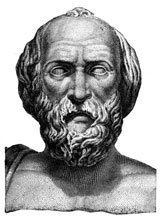
Lycurgus


Our next session is devoted to Lycurgus, the legendary lawgiver of Sparta. Plutarch's Life, translated by Dryden, is here. As we are in the process of reading Exodus, it's worth considering the differences in how the entire matter of the Law is thought and rendered in Plutarch, versus how it comes into play in the books of Moses.

For further exploration: You might find Plutarch's parallel account of the Roman king, Numa Pompilius, of interest. He gave Rome certain of its key values and institutions, much as Lycurgus did with Sparta. If Plutarch's Life of Numa is too long, there's a useful brief account of his life and works on Wikipedia.

Friday, March 24, 2006

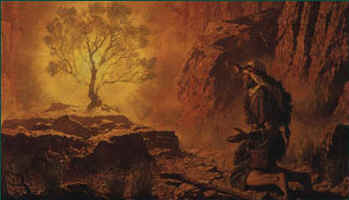
Exodus


On March 29, Mary Rosner will begin our reading of Exodus. The first 20 chapters are filled with narrative action. What is the essential story here? How does it follow, if it does, from Genesis? How does it relate to the institution of the Law which takes place at the exact center of Exodus?


Sunday, March 19, 2006

Socrates in the seaport


The Republic begins during a festival at Piraeus in honor of Bendis, a goddess recently imported to Athens from Thrace. The settings of Platonic dialogues often make oblique comments upon their subjects. What does this one suggest?

Saturday, February 25, 2006

The Republic


For our meetings on March 8th and March 22nd, Pat will take up selections from Plato's Republic. Any edition of the text is fine, several are online, including the Jowett translation.

Tuesday, February 07, 2006

Visualizations of Joseph

Click on the images for larger versions:


Guido Reni, Joseph and Potiphar's Wife, c. 1631


Michaelangelo, Jacob Joseph, Sistine ceiling

Friday, January 27, 2006

Joseph and his brothers

On Feb. 8 we'll begin the last story of the first book of the Bible, the Joseph story (Gen. 37-50).

We'll continue our reading on Feb. 22. A few questions to consider as we go through the story:
  • In terms of the major kinds of figures we find in the Bible, what is Joseph? Is he a patriarch? a prophet? or something else?
  • What is the nature of dreams in this story, and how do they differ from earlier dreams narrated in Genesis?
  • Although we won't have time to examine it in detail, the story of Judah and Tamar (chapter 38) offers numerous points of relevance and contrast to the tales of Jacob and of Joseph. What are your observations?
  • Consider the plot structure of Joseph: the anticipatory dreams, the heinous act, the covering up of that act, the discovery of Joseph to his brothers, the denouement. In some ways, the plot structure can be suggestively compared with that of Greek tragedy as outlined by Aristotle in his Poetics. We may wish to note some of these similarities and differences with reference to Oedipus the King.

Sunday, January 22, 2006

Artifacts of the Bible

A comprehensive exhibition on the history of the Bible, known as Ink & Blood: Sacred Treasures of the Bible, is on display at Florida International Museum (FIM) from January 13th to May 14.

The artifacts include authentic Dead Sea Scroll fragments, ancient Biblical manuscripts and 5,000-year-old pictographic clay tablets from ancient Mesopotamia.


Directions to the new home of FIM, 244 Second Avenue North, St. Petersburg.

Monday, December 26, 2005

A reminder of time and place

Our next meeting will be on January 11. We will be at the North Sarasota Library, a very nice facility on Newtown Blvd. just off 27th Street, between 301 and Tuttle. Follow the above link for more details.


A more detailed map can be found here.

We'll be talking mostly about Jacob.

Arnold and Auerbach

Two exemplary comparative essays on the literatures of the Greeks and the Hebrews are Matthew Arnold's chapter on "Hebraism and Hellenism" in Culture and Anarchy, and the first chapter of Erich Auerbach's Mimesis.

While Arnold takes a "macro" approach, offering an overview in the context of European, and especially British, literary history, Auerbach offers a "close-up" reading of two passages, one from Genesis, the other from Homer's Odyssey. Paying careful attention to formal literary features of each passage leads Auerbach to some fascinating insights into the distinctive worlds of the ancient Greeks and Hebrews.

Wednesday, December 21, 2005

Three views of Jacob

Continuing with representations of the patriarchs, here are three images of Jacob's vision by Murillo, Domenico Fetti, and Jusepe de Ribera. Click the image to enlarge. More images can be found here.


Jacob's Dream: Murillo, 1660


Jacob's Dream of the Ladder to Heaven, Domenico Fetti, 1618-20


Jacob's Dream: Jusepe de Ribera, 1639