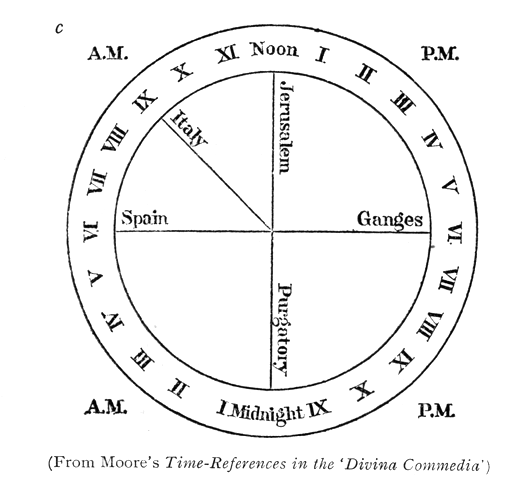
A diagram by Moore that might help with some of the elaborate (and lovely) time references in the Purgatorio:

Reading classical works aloud in Sarasota, and talking about them.
...we are faced with an unavoidable dilemma. Is the conviction that acting unreasonably contradicts God's nature merely a Greek idea, or is it always and intrinsically true?
I believe that here we can see the profound harmony between what is Greek in the best sense of the word and the biblical understanding of faith in God. Modifying the first verse of the Book of Genesis, the first verse of the whole Bible, John began the prologue of his Gospel with the words: "In the beginning was the Word".
This is the very word used by the emperor: God acts, [text unclear] with logos. Logos means both reason and word - a reason which is creative and capable of self-communication, precisely as reason. John thus spoke the final word on the biblical concept of God, and in this word all the often toilsome and tortuous threads of biblical faith find their culmination and synthesis.
In the beginning was the logos, and the logos is God, says the Evangelist. The encounter between the biblical message and Greek thought did not happen by chance. The vision of Saint Paul, who saw the roads to Asia barred and in a dream saw a Macedonian man plead with him: "Come over to Macedonia and help us!" (cf. Acts 16. 6-10) - this vision can be interpreted as a "distillation" of the intrinsic necessity of a rapprochement between Biblical faith and Greek inquiry.
In point of fact, this rapprochement had been going on for some time. The mysterious name of God, revealed from the burning bush, a name which separates this God from all other divinities with their many names and simply declares "I am", already presents a challenge to the notion of myth, to which Socrates' attempt to vanquish and transcend myth stands in close analogy.
Within the Old Testament, the process which started at the burning bush came to new maturity at the time of the Exile, when the God of Israel, an Israel now deprived of its land and worship, was proclaimed as the God of heaven and earth and described in a simple formula which echoes the words uttered at the burning bush: "I am".
This new understanding of God is accompanied by a kind of enlightenment, which finds stark expression in the mockery of gods who are merely the work of human hands (cf. Psalm 115). Thus, despite the bitter conflict with those Hellenistic rulers who sought to accommodate it forcibly to the customs and idolatrous cult of the Greeks, biblical faith, in the Hellenistic period, encountered the best of Greek thought at a deep level, resulting in a mutual enrichment evident especially in the later wisdom literature.
Today we know that the Greek translation of the Old Testament produced at Alexandria - the Septuagint - is more than a simple (and in that sense really less than satisfactory) translation of the Hebrew text: it is an independent textual witness and a distinct and important step in the history of revelation, one which brought about this encounter in a way that was decisive for the birth and spread of Christianity.
A profound encounter of faith and reason is taking place here, an encounter between genuine enlightenment and religion. From the very heart of Christian faith and, at the same time, the heart of Greek thought now joined to faith, Manuel II was able to say: Not to act "with logos" is contrary to God's nature.

I call this approach the history of concepts. It engages other worldviews rather than imposing modern ideologies or academic fads upon them. It does not assume, for example, that a fourteenth-century mystic's experience with God was "really" a psychotic episode, a chemical dysfunction of the brain, or a fraud. The historian of concepts, aware of the precariousness and limitations of her own views, does make a value judgement. It is the judgement that the wider our world view is the better, and she does not see a way of getting a wider world view than through the history of concepts itself. For that method, by exploring the entire history of a concept, embraces all the thought about that concept from its beginning to the living present. What could give you more?
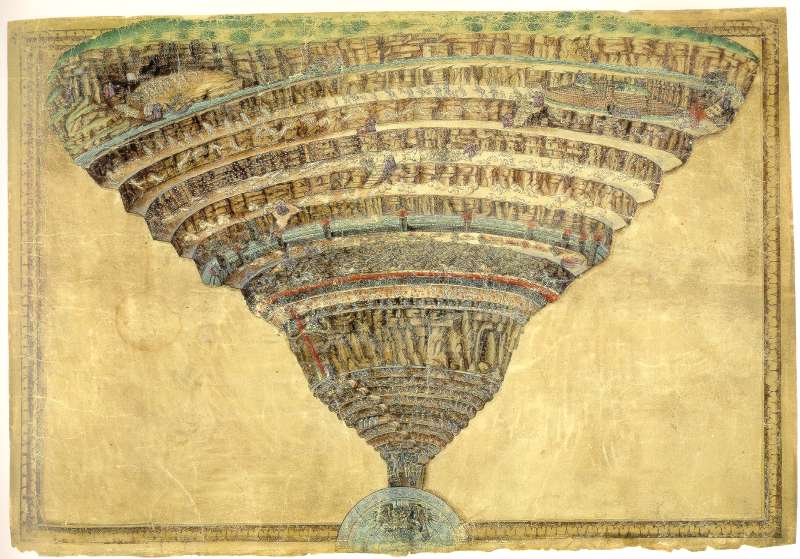

Accordingly, two cities have been formed by two loves: the earthly by the love of self, even to the contempt of God; the heavenly by the love of God, even to the contempt of self. The former, in a word, glories in itself, the latter in the Lord. For the one seeks glory from men; but the greatest glory of the other is God, the witness of conscience. The one lifts up its head in its own glory; the other says to its God, "Thou art my glory, and the lifter up of mine head."The link above is to excerpts from the book. The entire City of God is online here. A wikipedia article on the book is here. Here's another on Augustine himself. The standard bio of Augustine is a classic, Augustine of Hippo, by Peter Brown. Be sure to get the 2000 edition which has two new essays at the back.



I still thought that it is not we who sin but some other nature that sins within us. It flattered my pride to think that I incurred no guilt and, when I did wrong, not to confess it... I preferred to excuse myself and blame this unknown thing which was in me but was not part of me. The truth, of course, was that it was all my own self, and my own impiety had divided me against myself. My sin was all the more incurable because I did not think myself a sinner.Our next session will address the first nine books of Augustine's Confessions. Early on, Augustine describes his involvement with Manichaeism. For some background on this sect, which was declared heretical by the early Christian Church, go here.


